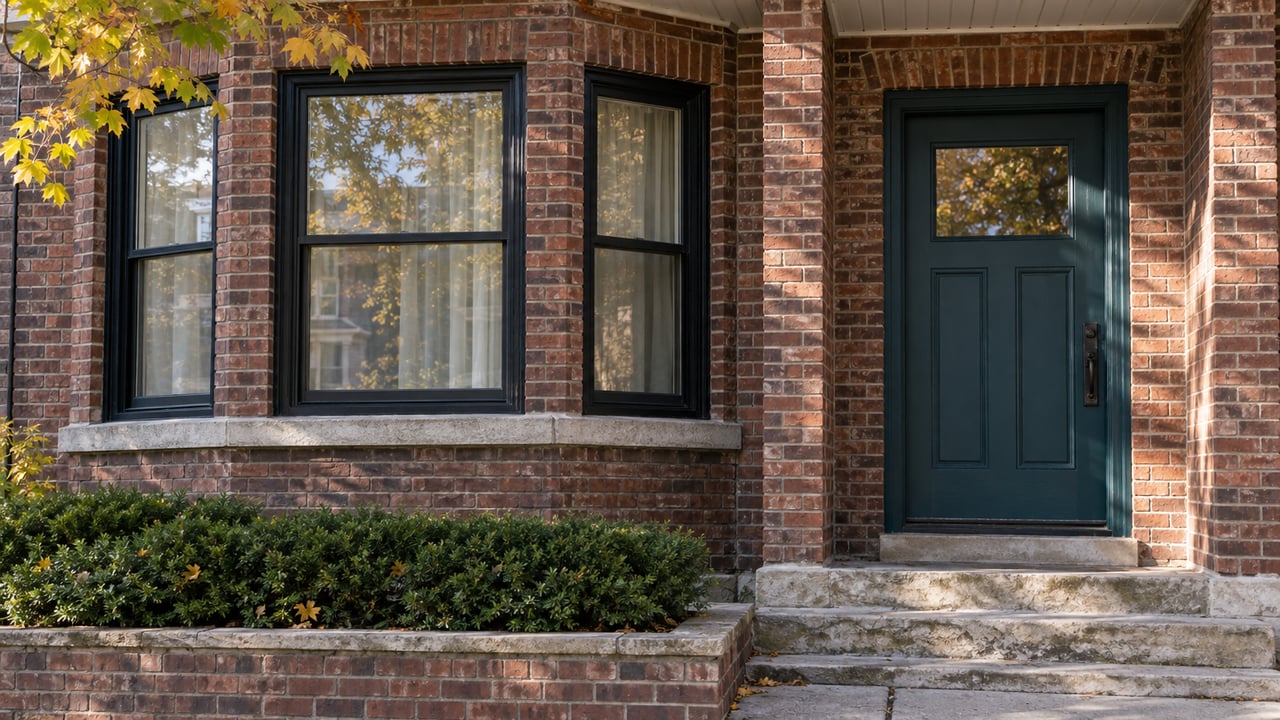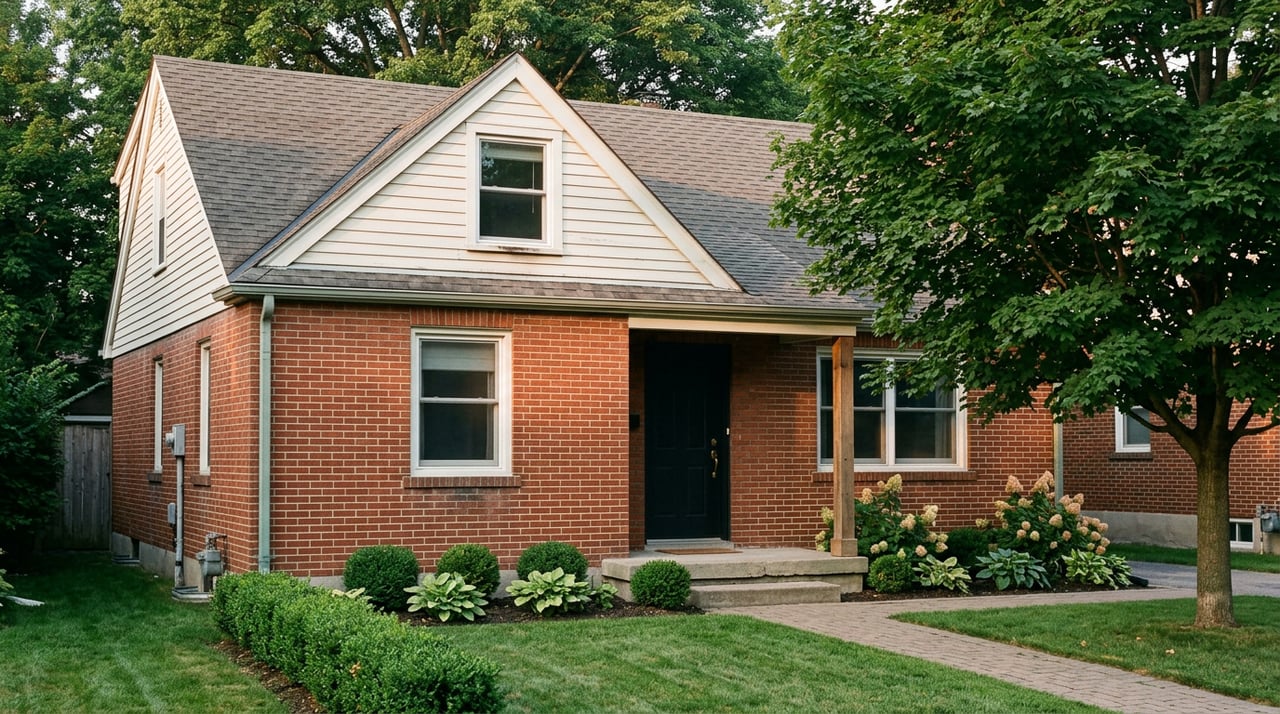
Drive the triangle of streets between O'Connor, St. Clair East and Victoria Park and you're standing on what used to be an apple orchard, as NOW Toronto reported. Crews built 197 cottage-style homes on that land between 1944 and 1946, a community locals still call Sunshine Valley or Topham Park. The street names tell you what it was for: Valor Boulevard, Warvet Crescent, Vicross Road, plus streets honoring Victoria Cross recipients Topham, Barron and Merritt. A few kilometres east, Woodbine Heights tells the same story with its own memorial, a Dieppe Park established in 1943 and a plaque tucked into the corner of the Kiwanis Outdoor Pool at Cedarvale and Cosburn.
These neighbourhoods were built to house returning soldiers, fast. Some of the original Victory Housing built under the War Measures Act went up from floor to chimney in less than 36 hours. That speed is worth remembering when you're standing in the attic of a bungalow on one of these streets today, because wiring and construction choices made for a 1946 kitchen may differ from the needs of a 2026 one. That difference can affect buyers' closing plans.
A Neighbourhood Built to a Deadline
East York's growth spurt ran from roughly 1948 to 1961, but the core of Old East York, the pocket bounded by Danforth Avenue, O'Connor Drive, the Don Valley and Victoria Park, filled in earlier and faster, largely with detached and semi-detached bungalows built under federal wartime housing programs. These weren't custom builds. They came from a small catalogue of standardized floor plans, built cheaply and quickly to solve a housing shortage, not to last a century without upgrades.
They have lasted, though, which is part of why buyers love them. Deep lots, quiet cul-de-sacs, a real sense of neighbourhood identity. The wiring behind the plaster is another consideration for buyers.
The Wiring Behind the Walls
Homes built before about 1950 across Toronto, East York included, commonly still carry knob-and-tube wiring: an ungrounded, two-wire system that uses ceramic knobs and tubes to route conductors through the framing. It was a reasonable system for a home with a couple of light fixtures and a radio. It was never engineered for central air, a dishwasher, a home office and an EV charger running off the same panel.
Two things make it worse with age. The rubber and cloth insulation on the wire becomes brittle over decades, raising the risk of arcing. And when attic insulation gets blown in over knob-and-tube, which has happened in most retrofitted Toronto homes, the wiring loses the open-air cooling it was designed around. Add to that a detail specific to East York: legacy, low-capacity service panels are especially common here, which means a wiring problem often travels with a panel problem.
Why the Deadline Isn't Moving Day
The pressure to deal with knob-and-tube can begin well before moving day: it starts the moment your offer firms up, because that's when your insurer gets involved.
Many Ontario insurers in 2026 will not write a new homeowner's policy on a property with active knob-and-tube wiring at all. Others will bind coverage conditionally, on the promise that the wiring is fully removed and certified within a set window, commonly 30 to 90 days from the policy start date. If you can't produce proof of insurance, most lenders won't fund the mortgage, which means the electrical clock and the closing clock are the same clock.
Getting that proof means more than hiring an electrician. Ontario requires a formal Notification of Work filed with the Electrical Safety Authority before the job starts, and the work has to pass an ESA inspection before you receive a Certificate of Acceptance, the document your insurer will actually ask to see. That process takes coordination and time, and it rarely fits inside a standard 30-day insurance binder if you're only starting to look for an electrician after your financing conditions have already been waived.
Two Ways to Handle It, and What Each One Costs
Not every knob-and-tube situation calls for the same fix. The scope depends on how much of the original wiring is still live and how accessible it is.
| Approach | What it involves | Typical cost | Insurer acceptance |
|---|---|---|---|
| Full rewire | Every circuit replaced with grounded copper, walls and ceilings opened at junctions and devices | $8,000 to $20,000 depending on home size | Accepted by nearly all insurers once ESA-certified |
| Partial rewire (during a reno) | Targeted circuits replaced while walls are already open for other work | $3,500 to $7,000 for the electrical portion | Accepted by some insurers, others still want the full system gone |
Partial work is genuinely attractive if you're already planning a kitchen or basement renovation, since the walls are open regardless. But it's worth confirming with your insurance broker before you count on it, because a shrinking number of carriers will accept anything short of a full, certified rewire.
What This Adds to the Price You Already Negotiated
MLS-tracked pricing this summer put the average East York home near $1.26 million, with typical homes moving off the market in about 20 days. Detached bungalows and updated two-storey homes make up most of that activity, with semi-detached properties generally landing in the $900,000s to low $1.2 millions and detached homes running from roughly $1.1 million into the $1.6 million range depending on renovation history. Condos are a thin slice of the market here, mostly clustered along the Danforth edge.
None of those figures include a rewire. If you're buying a $1.1 million bungalow that still has active knob-and-tube, a full remediation can represent close to 2 percent of the purchase price on top of everything else, land transfer tax, legal fees, moving costs, due before your first winter in the house if your insurer sets a tight remediation deadline.
That math matters more right now than it did a year ago. Toronto's broader market has been tightening through the summer. As of the August 5, 2026 update from WOWA, the GTA's sales-to-new-listings ratio climbed to 41.4 percent in July, up from 39.2 percent in June and well above the 34.6 percent recorded in July 2025. Months of supply, while still balanced overall, has been shrinking year over year. A tighter market gives sellers less reason to negotiate a price reduction to cover someone else's electrical bill, which means the smarter move is building the cost into your offer terms up front rather than hoping to claw it back later.
Building the Clock Into Your Offer
A few habits protect you here, whether you're the one buying the bungalow on Warvet Crescent or the one preparing to list it.
- Ask for an ESA-licensed electrical inspection, separate from the general home inspection, before you waive any financing condition. General inspectors can flag visible knob-and-tube but often can't see what's buried behind finished walls.
- Get a written insurance quote before you firm up, not after. If a carrier will only offer conditional binding, you want to know the exact remediation window before it becomes your problem to solve on a deadline.
- If you're selling one of these homes, consider having the wiring assessed and, ideally, remediated before listing. A Certificate of Acceptance in hand removes the biggest point of friction a buyer's lender and insurer will raise, and it prevents last-minute renegotiation after conditions are waived.
- Treat a rewire quote as a real line item in your offer strategy, not a contingency you'll deal with later. A $10,000 to $15,000 gap between what you budgeted and what the wiring actually needs can derail a firm closing date.
A Few Questions We Hear Often
Does every East York bungalow have knob-and-tube wiring? No. Many have been partially or fully rewired over the decades, sometimes by a previous owner, sometimes during a renovation. The only reliable way to know is a dedicated electrical inspection, since a home can look fully modern at the outlets and still have original wiring behind a finished ceiling.
Does inactive knob-and-tube draw insurer attention? It's active wiring still carrying current that draws insurer attention, not old wiring that's been safely decommissioned.
Is a rewire something I can negotiate as a condition of sale? It can be, though most deals handle it through price adjustment or a holdback rather than requiring the seller to complete the work before closing. Either way, it needs to be on the table before you remove your conditions, not after.
If you're weighing a wartime bungalow in Old East York or Woodbine Heights and want a clear-eyed read on what a specific property actually needs before you write the offer, Jenny and Shane can walk the house with you, line up the right inspection, and make sure the electrical clock never catches you off guard. Book a 15-minute consult with Jenny & Shane and bring your questions, wiring included.
This article is general information, not legal, tax or financial advice. Consult a qualified professional about your situation.